All Posts By

Gay Bradshaw

Hold the Line

By Mariposa Reflections

A colleague of mine visited the other day, terribly distraught. Her distress, its causes and events, numerous and diverse, ranging from the personal to the global, came “tumbling out like sweets from a jar.”[1] After sitting together in silence, in the wake of the outpour of these pained, confused feelings, she blurted out, “What can I do?” I answered, “Hold the line.” Again, there was silence. She then said, “Thank you. That’s exactly right.” We rose and said our good-byes.

It wasn’t my intent to stop the conversation. She was affected the same way I had been a few weeks previous when another friend texted me those three simple words. I realized that’s what Animals do. They hold the line.

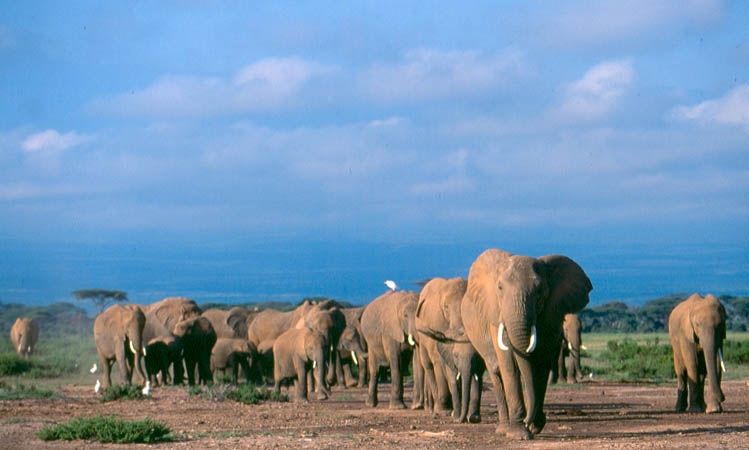
Dogs, Cows, Tigers, Elephants – indeed all Animals today, are faced with life-threatening, reality-shattering experiences. Like us, they are living in conditions far removed from evolutionary expectations. The differential between what we have evolved to need mentally and physically and what we actually experience is stress. This contrast has become so extreme that, as Sandra Bloom and Gabor Maté describe, everyday life, “normal” life, is traumatogenic. The drama and trauma of the dominating human culture is an unrelenting rip tide pulling us into the vortex of mass fear and bewilderment causing profound disorientation to the point of questioning the fundaments of life– who are we?

This is a question which comes to haunt tortured and captive-held Rhesus Monkeys used as experimental surrogates. When they are able to escape to sanctuary, however, internal fissures of trauma begin to heal and re-anneal into the unity and harmony of the natural world. Ancestral instinct is the eternal compass. It is a power far greater than the anvil of trauma.

Animals remain anchored in their origins. While using the currency of their forms to navigate the vicissitudes of life, they never abandon the integrity of the Earth. They never forget who they really are. Animals hold the line. This is what we must do – remember who we really are. Hold the line.

[1] Joan Baez. Winds of the Old Days.
photo credit: Cynthia Moss

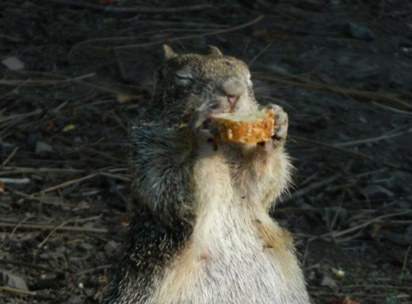
Asa

By Mariposa Reflections

Although we humans tend to go to great lengths to make something happen – scheme, ponder, plan, detail after detail, change after smallest change – often it is the unplanned, the unexpected, which has the greatest impact. Such events happen quietly, as if anticipating the magnitude of approaching consequences. And so it was, one fall day.

I was sitting where forest meets field enjoying the peace of the setting sun. Autumn days are shorter than those of summer, yet somehow, they feel much longer. Maybe it’s the sun’s sleight of hand using pockets of lingering light caught in the scatter of red and orange to trick the eye. It was at that moment of celestial pause when my gaze happened upon a Ground Squirrel.

He was sitting on a rocky outcrop, two tiny-clawed hands clasped, resting high upon his chest as he stared out over the burnished field. He wore a transcendent expression of awe and appreciation. There was no mistaking that the Ground Squirrel was, similar to me, taking in the beauty of the day’s last light. The Squirrel was in rapture. This realization was startling.

Until then, Ground Squirrels were not on my best friend list. They intrude into everyone and everything. Nothing and no one are safe. Squirrels shamelessly and fearlessly push away full-grown Deer and Wild Turkeys to get at greens and seeds. They ravage shoes, boxes, cars, bags—anything that serves their nests. The cabin’s dining room floor sank a good ten inches below the iron woodstove after vigorous Ground Squirrel tunneling. In all fairness, how were they to know that the pioneer-aged structure was built directly on Nature’s skin and that their work would eventually open a crack large enough for the slender form of a Rattlesnake to enter the room and take temporary residence under a chair. I regarded Ground Squirrels as marauders—cute, but marauders all the same.

All these less than positive thoughts vanished when I discovered Ground Squirrel aesthetics. Suddenly, the objectifying wall behind which I stood dissolved, and my perception radically shifted. The centroid of my reality sank into a space far and away from the choppy surface waters of conceptual mind.

After the sunset encounter, I began visiting a Ground Squirrel zendo—a grassy slope that roofs their burrowed castles. I followed the Squirrels as best I could. Not only are they remarkably agile, but Ground Squirrels have a knack of telescoping their seemingly boneless bodies and disappearing, snakelike, into hairline cracks. It was here that I met Asa.

She was an elderly female Ground Squirrel. Asa was one of many Squirrels who raided hearth and home, but unlike others, she had a head tilt. For some reason, she took me on to show me her world from her point of view, sense, sight and scent. She insisted that we commune beyond form, beneath the individual suits we happen to wear. Asa demanded that I take a step deeper from mere observation. I had to drop the veil of human privilege – the composite of imperceptible barriers which tell us that we humans are different, better and apart from Nature.

In tacit agreement, Asa and I began to rendezvous every dusk. Soon, we were meeting regularly sharing morsels of baguette and berries and a glass of wine for me. The other Squirrels obviously understood the exclusive nature of our friendship as they never tried to partake of Asa’s fare.

During these sessions, Asa periodically retreated to her burrow to store some of her meal. After a few moments, she would emerge from the hole and resumed sitting next to me. Our evenings of breaking bread continued for several months until fall when Asa’s visits shortened and became less predictable. Nonetheless, I sat in our spot every dusk, glass in one hand, baguette in the other, waiting. One day, she did not return.

Winter was coming and the train of storms had begun to roll in. The Squirrel community had—as their name bespeaks—gone to ground to hibernate. Because Ground Squirrels sometimes venture out briefly when the cold lifts, I always put a few berries and a piece of baguette at Asa’s door. Once, I was lucky enough to spot her darting out to retrieve her goods. She looked up —head tilted to one side, the upside eye meeting mine—then dragged the food in and disappeared. It was the last time I saw her.

I don’t know whether she died during or after hibernation. She might have been grabbed or dug out by a Fox or simply passed. I hadn’t ever grieved so deeply. It was not the acute, engulfing, debilitating kind of grief. My grief for Asa was a slow soft ache at the level of the soul. To this day, I mourn her. I hope when Asa and I meet again, I will have evolved to the fineness of her mind and heart.

Bear

By Mariposa Reflections

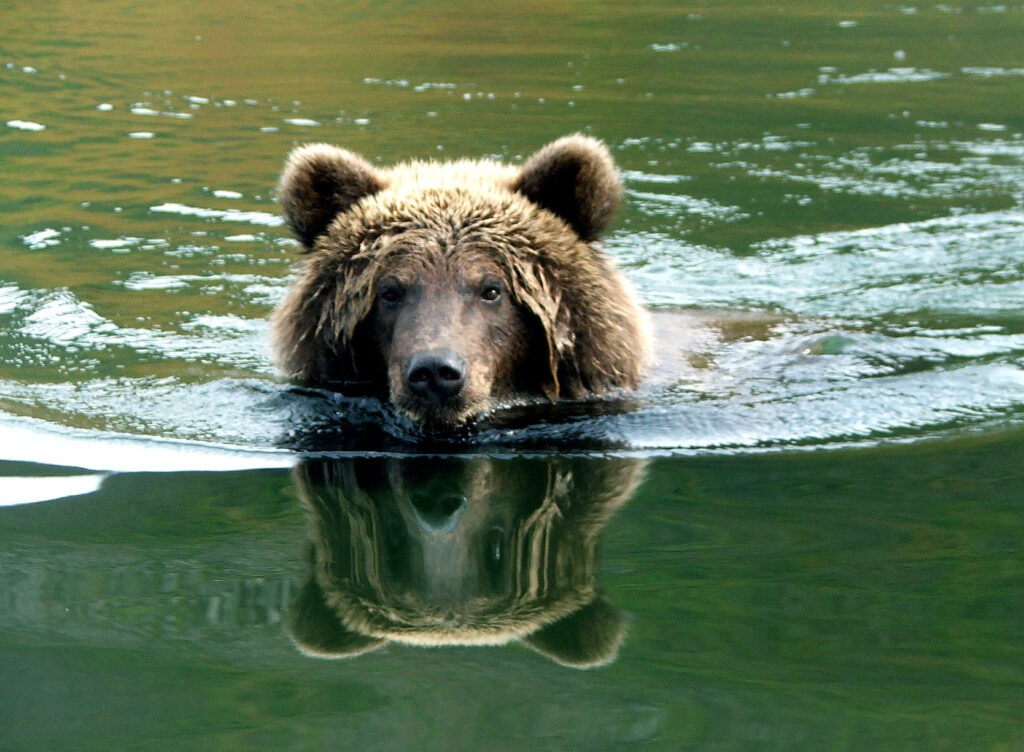
I am not a concept
Nor a statistic
Or a Latin name scratched in the pages of an ancient tome.

I am not the image in your camera
Not a painted visage
Not a stencil on your shirt.

I am that part of you
shed ten thousand years before
who refuses to be imprisoned in the skin of imagination.

I am everything you want to be
And everything you fear:
I am Truth.

Unerringly,
I stalk and grab you cowering
in the refuge of separation.

Mercilessly,
I pull your entangled mind along reality’s rocky shore.

Then, gently,
I return you to yourself
to rest in the blinding sweet waters
of the
infinite
One.

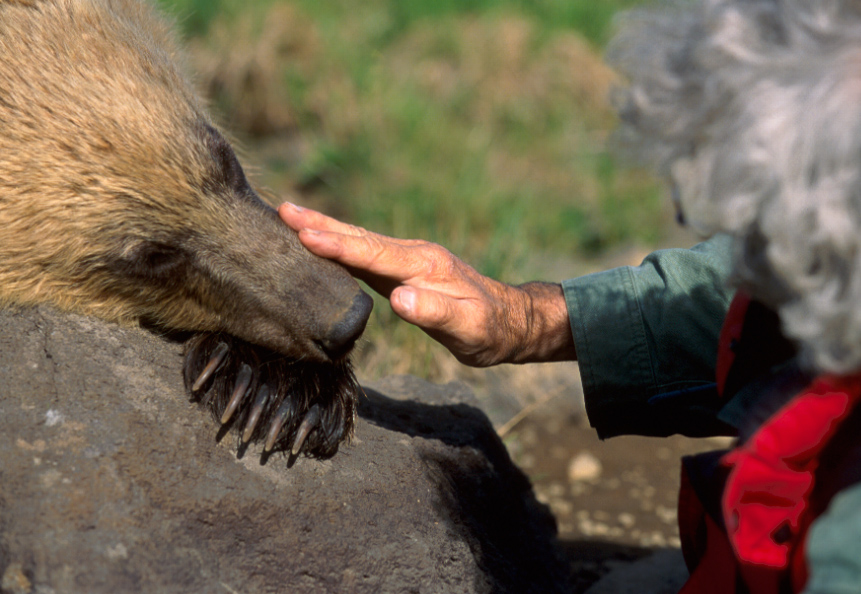
Photo credit: Charlie Russell

~ Dedicated to Ox ~


Mariposa Reflections is a weekly e-post paired with Mariposa Meditations, a biweekly online Nature mindfulness and meditation gathering. Sign up here to receive weekly Mariposa Reflections. Learn more and register for Mariposa Meditations here.

In What Key Do You Want to Sing Life?

By Mariposa Reflections

I have always been a fan of songs like Secret Love, A Summer Place, Moon River, Je t’attendrai (“I will wait for you,” after which our sanctuary is named) – even extending to the classical – Die Schöpfung, La Traviata, Chopin, Rachmaninoff . . . what a lot of people would call a combination of overly romantic exuberance and melancholia. Maybe, but, to a one, they share a common theme – love of life and the possibility, the reality of a world made entirely of love.  I don’t care what you say, I won’t live in a world without love. This is the world of Animals.

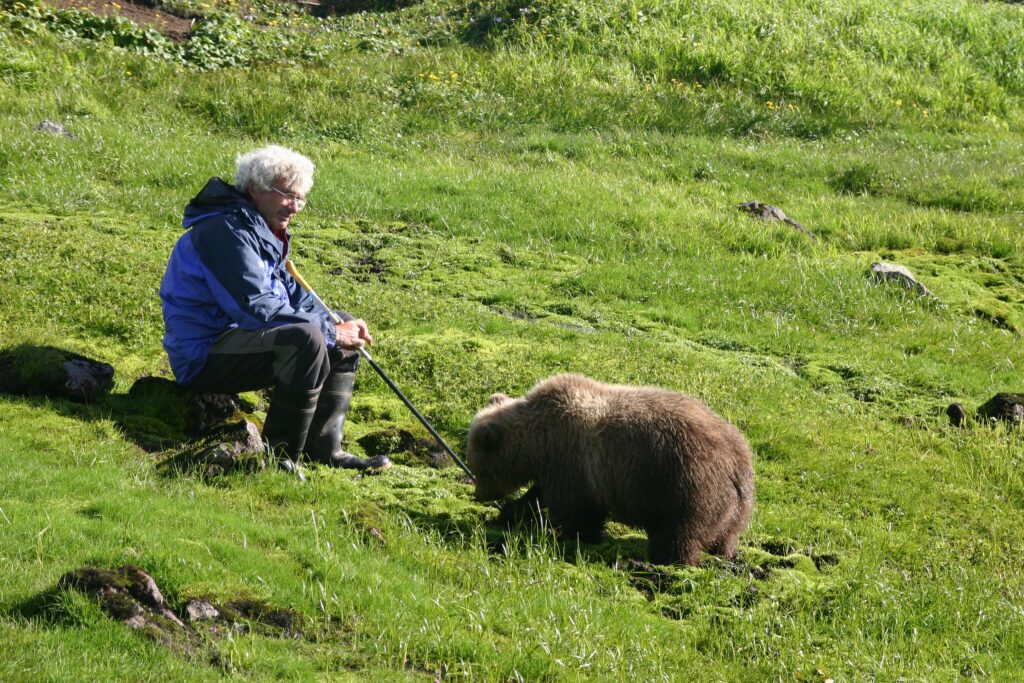
Yes, Wolves kill Moose, and Leopard Seals, Puffins. You might protest and say that one could hardly call that love. True, but if you look deeper, none of these individual eaters ever leave the world of love. Nonhuman life is cohered by love. That is why you see the self-same Seal spending days helping what she perceives as a diver in dire danger, an Octopus bothering to respond to the overtures of a human, a mother Brown Bear taking a man under her wild wing to help him raise his baby Bears. They are all lessons in how most humans make too much and too little of death. None of these individuals take a life thoughtlessly. Any act in the wild is an act of courage. Attention focused on procuring food is accompanied by inattention as to what and who may be standing by and so everyone is clearly aware that there, but for the grace of God, go I. . .Living is pursued with deep appreciation and parsimony.

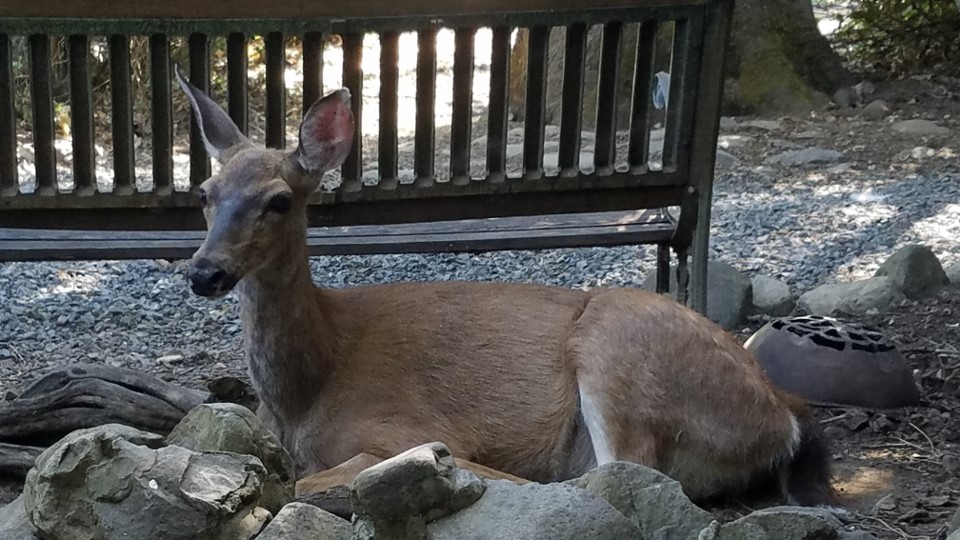
Maman Doe whom I have known for over a decade has had more than her share of pain and loss yet life’s cord of joy has never broken. Despite the ravages of injury, violence of hunting, and witnessing the scores and scores of fallen children and friends, gasping from the agony of human betrayal and the searing injustice of arrows and bullets, she retains original grace and light. Mourning weeds are now plainly visible, but when she walks, the air carries the complexity of Chopin’s Preludes, where the fullness of sadness, love and all of life submerge into one. I see that in every Animal I have known.

Every song, every symphony is marked by a particular key- a group of notes that dominate the tune. But every key contains all the notes. So does life. There are tragedies, horrors, ecstatic joys, and luminous revelations. Our lives span all the notes. The question we must ask and answer for ourselves is: In what key do you want to sing life?

~ Dedicated to Tommy ~


Mariposa Reflections is a weekly e-post paired with Mariposa Meditations, a biweekly online Nature mindfulness and meditation gathering. Sign up here to receive weekly Mariposa Reflections. Learn more and register for Mariposa Meditations here.

Eulogy

By Mariposa Reflections

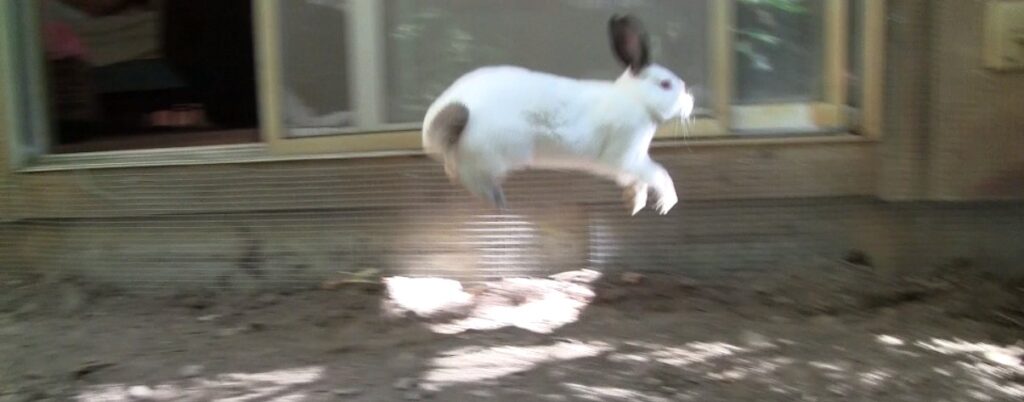
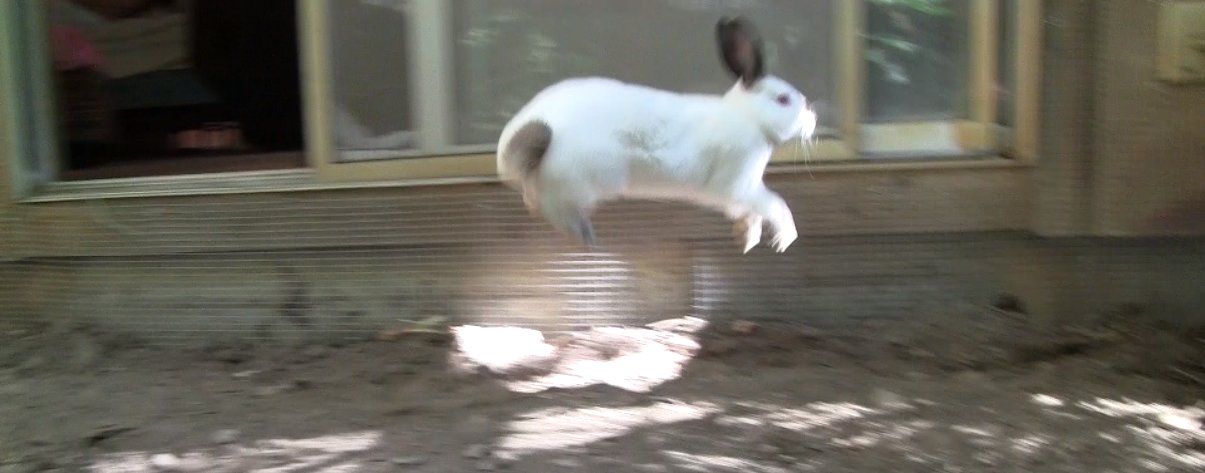
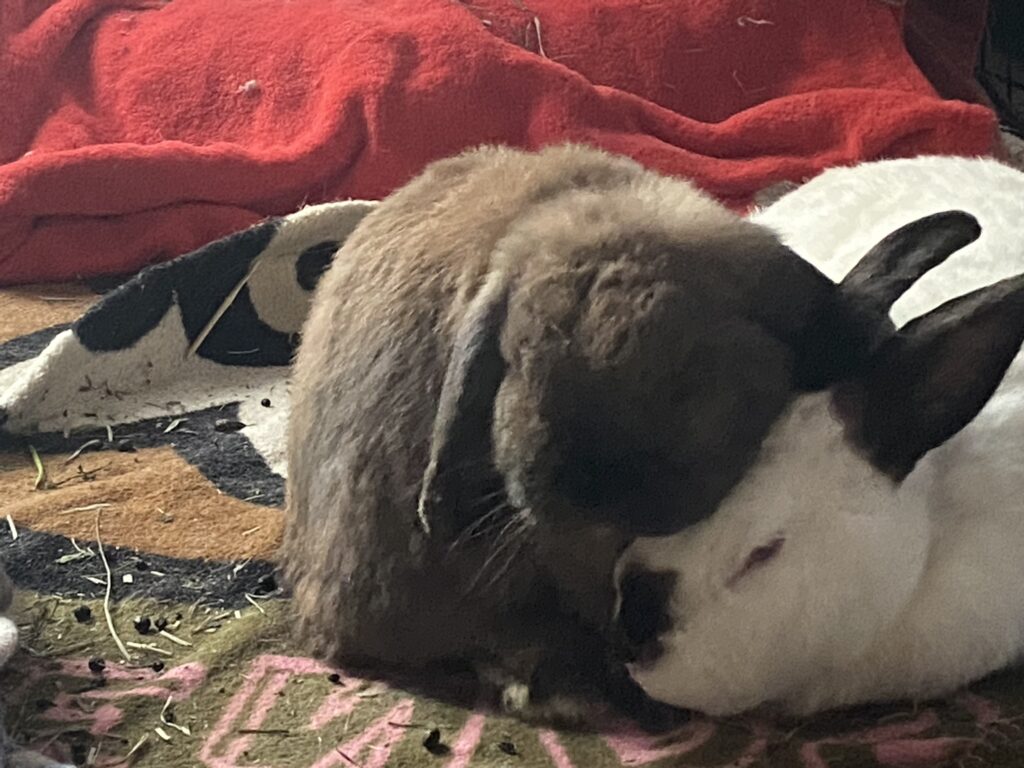
Just one look was all it took…I don’t know whether it was my activist friend’s warning, “Whatever you do, don’t look at Craigslist,” which unconsciously provoked me to do so, but I did and who appeared almost instantly were two Rabbits, one white, the other black, their backs pressed up against the farthest reaches of a tiny outdoor cage. The white one was staring directly at the camera, and therefore, directly into my eyes. His eyes spoke intelligent apprehension. There was no hesitation. Within hours, they had come home here, away from the brutality of backyard farming.

I didn’t recognize it at the time, but Coco Puff, the white Rabbit, and his brother Rafael, the black Rabbit, started our formal sanctuary. The Puff became the cornerstone, but not because he and his brother were first. Many refugees were already living here. It was because of his presence, dignity, grace, and perspicacity. He made clear the stark unholiness of Animal abuse. Like people on the Moon I see, are things not meant to be.

Puff and Rafe lived in the bedroom where sliding doors looked out over green to the creek below. The spring after they arrived, we built the Habitat by enclosing a large area just off the sliding doors. Here, the Rabbits could bounce out in the morning to cavort under the grace of an ancient Black Oak and grove of Maples. The area was screened with tough meshing on all sides and top and girded by an eighteen-inch-deep hardware cloth to ensure no ingress or egress.

By that time, fizzMarie had joined the family. She was a quintessential loving mother and took the two young Rabbits under her apron of love and nurturance. When the Habitat structure was finally secure, we opened the door. fizzMarie immediately jumped down, explored a few minutes, then called to Rafe and Puff to come out. After much coaching and coaxing from fizzMarie, Rafe finally took the leap. Puff, however, was circumspect. Even after fizzMarie jumped back inside to convince Puff that all was fine, he remained obdurate. At last, with fizzMarie’s loving patience and persistence, Puff took the plunge and joined the others. Within moments, we were gifted with the most elegant and exquisite binky performed by The Puff.

Puff was ever the carer, not only for his partners but for everyone. The empath that he was brought him to those in need. He was meticulous with his own self-care, always spotless, every hair in place and applied the same refined attention to the grooming of others. No matter the situation, he accompanied those when and where they needed. Then he fell in love with roseMarie, a black and silvered, very determined and protective female Rabbit.

It was love at first sight. Their time together was one long honeymoon. The Je t’Atttendrai (I will wait for you) Chalet was remodeled by then and so they moved in together spending many long hours outside eating clover and inside snuggling, loving life.

As she aged, roseMarie lost use of her back legs. The Puff never let her out of his sight. In the morning, after I carried her out to the clover and digging mountains, The Puff would run around a bit, checking things, but return to his lover every few minutes to nuzzle and see how she was feeling, what did she needed and so on. When roseMarie finally passed, Puff was devastated. He stayed inside for days, just staring into space.

In a few weeks, he made friends with Amelia, another black, compact, and feisty partner—a very much in-charge kind of person. She made it clear that no one gets away with messing with The Puff. They were good together and very happy, although Puff never forgot roseMarie. All this took place over eleven years. Last year, things drastically changed.
Almost overnight, The Puff became blind. In two short weeks, his sight was limited to blurry shadows. We sought surgery but it was considered ill-advised given his age. Puff slowed down. Up until then, he was an avid athlete and extremely fit, but the blindness undermined his natural confidence. He no longer ran and binked with abandon. Amelia, of course, became his eyes which allowed him to roam, albeit in a constricted way. Puff followed the fence lines and waited at the lintel for Amelia to signal to come in. Although there was no threat, Puff was now always on guard even with Amelia’s watchful eyes. The welcoming world he loved so much had become an ominous gray. A few months later, he suffered an even more shocking experience.

The sustained, intense drought in southern Oregon has caused the soil to harden and contract. Unbeknownst to me, imperceptible cracks had formed under the Chalet. One August morning, as I went in to serve breakfast to everyone and open the doors to the Habitat, I saw Puff sitting with a blank stare. Amelia was lying flat next to him, limp, barely breathing. I ran upstairs for fluids, grabbing whatever medications I could not knowing what I was trying to treat when, as I stepped back into the Chalet, I heard a sickening sound- a rattling tail.

Rattlesnakes are common here, but not inside the dwellings (although a few years back there was one who wriggled into our 150-year-old cabin). Sensing me, the Snake slid under the refrigerator. The Rabbits were hastily packed in carriers and taken out to safety while I ministered to Amelia. She passed very soon. Puff and the others Rabbits were in shock for nearly a month.

As my senses and head cleared, I started to reconstruct what had happened. Both Rabbits had been loose in the Chalet during the night. Because of an incident the year before, I no longer let the Rabbits free in the Habitat at night. A Puma, wounded by a truck, had torn through the fencing in desperate search for food. Thankfully, the Rabbits were not out that night. But thereafter, outdoor time was restricted to daylight hours. To make up for their limited night ranging – Rabbits are quite nocturnal – I let Puff and Amelia loose in the Chalet to visit others. Obviously, the Snake had entered and Amelia, knowing her beloved partner was threatened, had defended Puff from the Snake and, as a result, was bitten.

Blind without his partner, Puff came to live in the upstairs studio with four other Rabbits who also have significant health issues. pierre Michel, having been rescued from a torture ring, suffered from multiple breaks in his back. Looking at the x-ray and shaking his head, the doctor said he had never seen damage as severe as pierre Michel’s. The doctor marveled that pierre Michel could even walk let alone hop. But he did and for many years ran around the Habitat enjoying life and even digging burrows. But when his partner, Calais, had a stroke, the two were moved into the studio where another pair of Rabbits, Antoine and Etienne, lived. After sustaining two strokes, Antoine was not ambulatory. Etienne, his brother, had periodic seizures which left him slightly paralyzed in an arm and a leg. True to form, The Puff immediately stepped in and became chief carer. He was ever so loving, gentle, and thoughtful, talking, nuzzling and grooming each one. The change brought on by his blindness, however, started a rapid decline.

His poor sight and loss of Amelia induced a change. Puff was no longer interested in exploring or going outside. This, combined with aging, took a toll. Puff developed very painful arthritis. Massage and medication helped, but life was much more challenging and the losses of the past began to weigh. Then, over two days, he grew withdrawn and despite supportive care, died in my arms.

This eulogy is nether sufficient nor eloquent enough to honor The Puff. When someone asked how I planned to celebrate my birthday, I told them that I was in mourning for my thirteen-year-old son. Puff was my son in every way even as he aged and despite his exquisitely refined and evolved consciousness and sensibilities to which I can never dream to attain. I am so humbled to have been able to live at the feet of this giant of a presence. No kinder soul ever lived.

Puff was a great man, one of those rare extraordinary souls whose earthly form can barely contain the expansive vastness within. Now that he has passed, his spirit moved on, I sit, wonder, and weep asking: when and where we will meet again.

~ Dedicated to Tommy ~

Sign up here to receive Mariposa Reflections.

Why Animals Need You to Meditate

By Mariposa Reflections

The other day, someone asked me this question, “How does meditation help you help Animals?” While a narrative about Buddhism, ego, consciousness, Thich Nhat Hanh and so on raced through my brain, I found that the only adequate response was, “Love.” My answer caught both of us by surprise and since he had to go one way and I, the other, without further conversation, I thought he deserved a fuller explanation.

The first thing that came to mind was something Charlie Russell said, “If you love someone, really love someone, then you have to understand them. To understand someone, you need to try and see the world through their eyes. If you don’t, then you are only seeing them through your values and views.”

Seeing the world through someone else’s eyes means that you care and respect them enough to learn what they find meaningful. Otherwise, you are defining them and your relationship by your concepts, your perspectives, and your needs. Charlie, of course, was talking about Bears. This was the core idea that he tried to get people to grasp.

Studying Bears – learning what they eat, where they live, how much they weigh, how long they hibernate –  provides information but, as Charlie pointed out, none of this helps or is of interest to Bears. They know all this already – they have to in order to survive. Turning a Bear into an object of study is a one-way conversation that leaves Bears out of the picture and retains the human imperative for control. If we really cared and loved Bears, then we would listen and see them.

We all want to be heard and seen – even introverts – because it means that we matter, we are loved. “Love,” Martin Luther King, Jr, maintained, “is not emotional bash; it is not empty sentimentalism. It is the active outpouring of one’s whole being into the being of another.” Meditation is a way that we can learn how to do this.

Meditation and mindfulness are practices to clear the human mind from ten thousand years of conditioning which has told us that we are separate and superior to Nature. Clearing the mind dissolves internalized conceptual and perceptual barriers and immediately brings our consciousness into the present moment. When we are being present with someone, we aren’t thinking about dinner, paying a bill or making judgments. In presence, we lose our sense of separation and self-importance and enter the space of love. “Love,” wrote Leo Tolstoy, “is a present activity only.” This is how and why Charlie and Bears lived so well together.

If we want to save Bears and the rest of Nature, if we want to connect deeply to the nonhuman world, then the vital first step is learning how to be fully present –  to actively pour our whole being into the being of Bears and other Animals. In other words, we have to learn how to love. By learning how to love we open our hearts and minds and enter the space where the Animals live. This is what meditation can help us do.

~ Dedicated to Tommy ~

Photo credit: Charlie Russell and Maureen Enns


Mariposa Reflections is a weekly e-post paired with Mariposa Meditations, a biweekly online Nature mindfulness and meditation gathering. Sign up here to receive weekly Mariposa Reflections. Learn more and register for Mariposa Meditations here.

The Lilac

By Mariposa Reflections

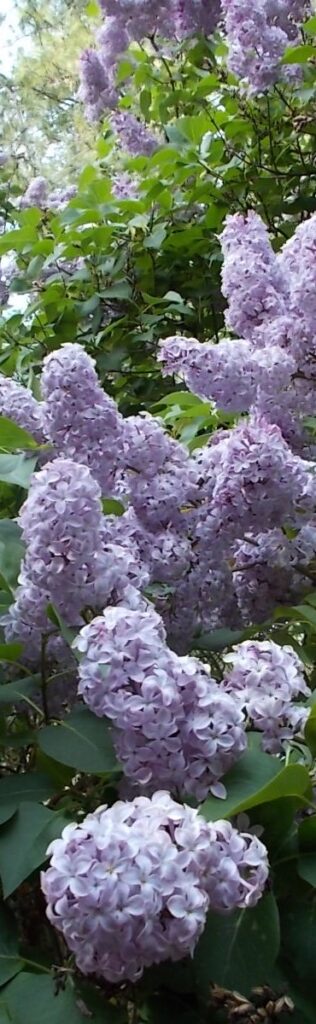
W here shall this go, she wondered,
Holding up the Lilac frond,
Broken by the brush of a passing Deer.
It was too beautiful to lie unhallowed
It needed a place to be held
It needed a home.
Three stems
Conjoined and beckoning
Like a waiting hand
Called to her own
And she placed the Lilac there.
With arcs of last year’s blades of grass
Garnishing the woody palm,
With row after row of brown and green,
She entwined circles of dainty twigs
With the tenderness of a mother Bird
And softened the deepening cup with
Nature’s mossy down.
A Robin’s throaty greeting
Broke through the Lilac’s crown
Flying to the branch above,
She landed, tilted her head
And smiling at the Woman,
Eye met eye in understanding.
Yes,
We have done this before
Together
Many times
In many places
As mothers
Weaving lives into Life
In service to
Our Mother
Earth.

by Gay Bradshaw

~ Dedicated to Tommy ~


Sign up here to receive weekly Mariposa Reflections.

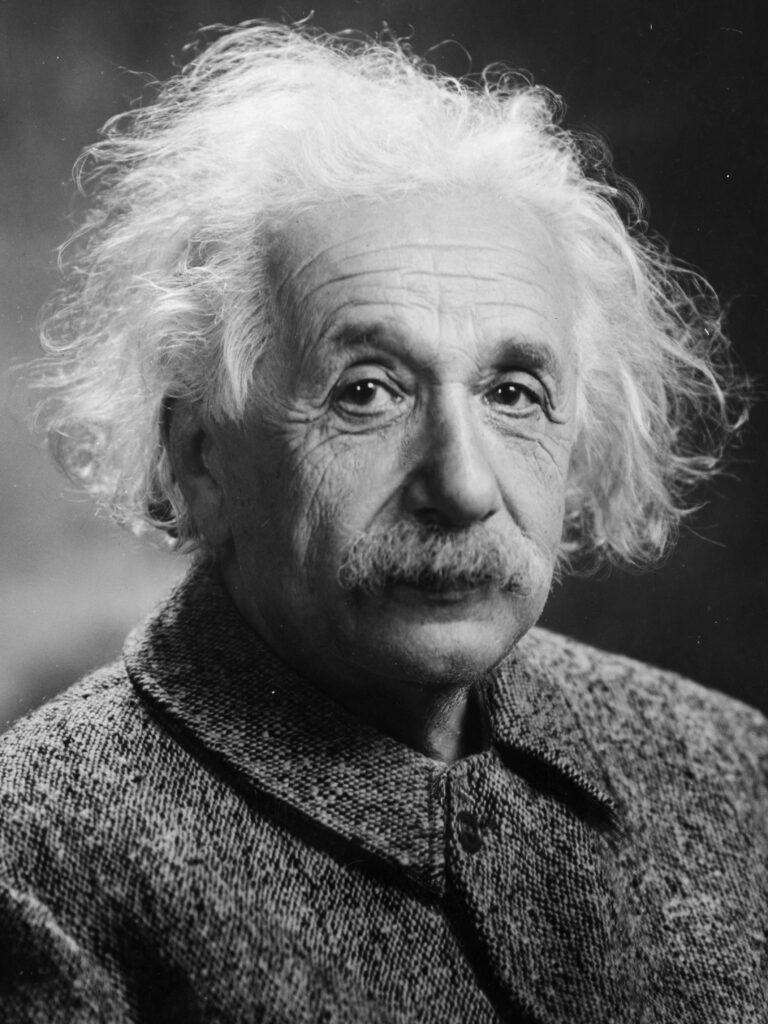
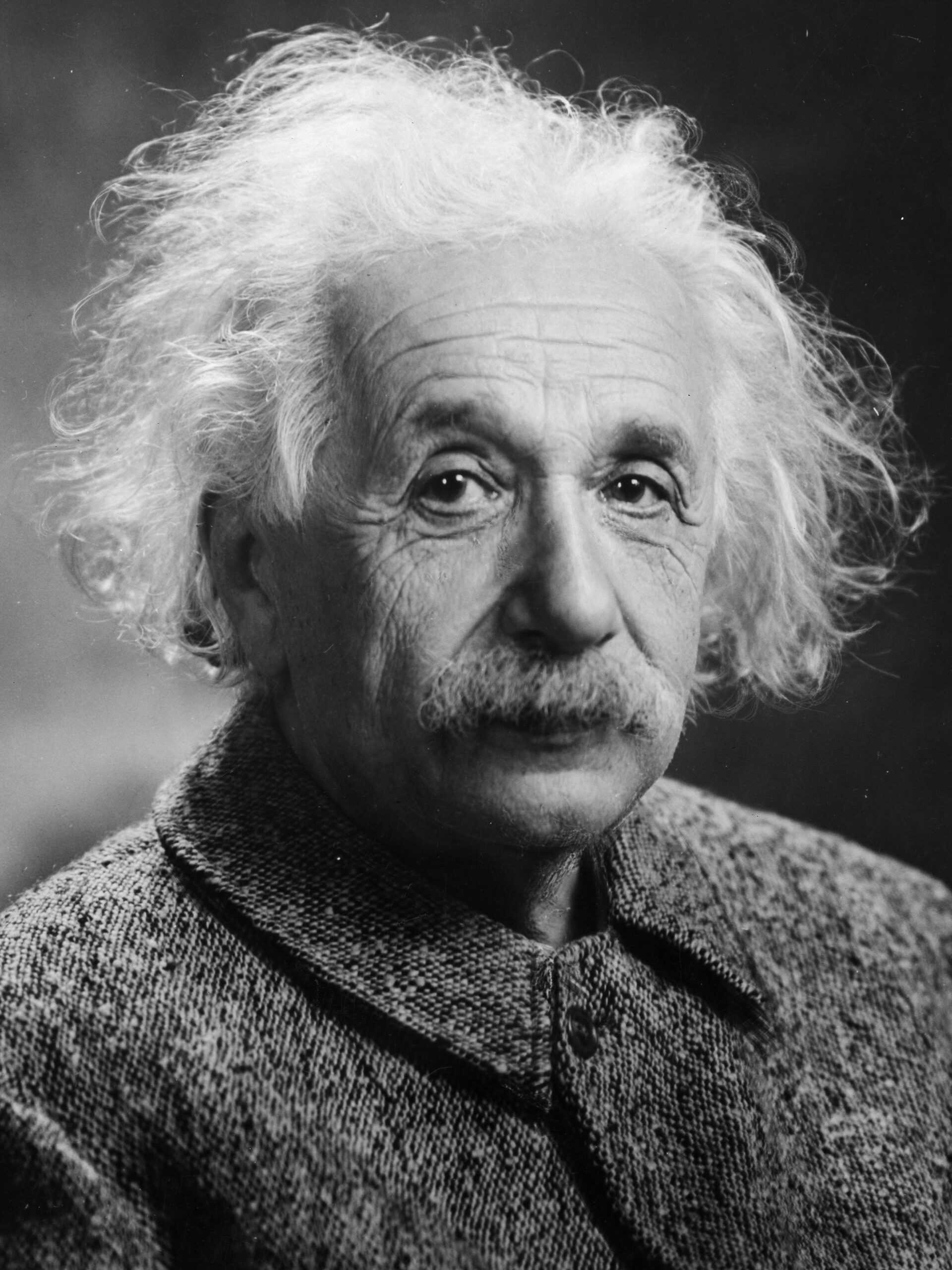
Einstein’s Wish

By Mariposa Reflections

What led the twenty-six-year-old German-born man to dash, clutching a brown envelope, and wearing a worn pair of green flowered slippers, into the busy streets of Bern, Switzerland, one morning in 1905? A passionate pursuit of physics.

Later, after his metamorphosis from anonymous patent clerk to collectively anointed genius, Albert Einstein would explain the rationale for his thirst, “‘I want to know how God created this world. I am not interested in this or that phenomenon, in the spectrum of this or that element. I want to know His thoughts,” “The rest,” which we might take to also include angels-on-a pin arguments by others which inevitably form vortices around great minds, “are details.”

In Einstein’s view, the ultimate way to discover “God’s thoughts,” the why and how the cosmos works, is revealed through mathematical inquiry. Charlie Russell’s drive was similar, he too sought to understand Nature, “I am in search of truth.” His tools of investigation were not sylphlike formulae, but eyes, ears, and body. They served as portals to hear Nature’s discourse, converse with Bears, and bring his mind into resonance with the rhythms of rivers, mountains, and winds. Interestingly, we find the intersection of these two vast souls in the work of another physicist, David Bohm.

Both Charlie and Bohm relied on embodied learning to inform their understanding. Similar to Charlie, who maintained, “I’ve always learned things by doing,” David Bohm rooted his insights in lived experience. In an interview with biophysicist Maurice Wilkins, Bohm describes how he used his body to understand quantum spin, the angular momentum peculiar to the tiny particles. “I can’t really articulate it, it had to do with a sense of tensions in the body, the fact that two tensions are in opposite directions and then suddenly feel that there was something else. The spin thing cannot be reduced to classical physics. Two feelings in the mind combine to produce something that is of a different quality. . . I got the feeling in my own mind of spin up, spin down, that I was spinning up and then down. Then suddenly bringing them together in the x direction (horizontal). . .It’s a kind of transformation that takes place.” This mode of understanding stemmed from childhood.

To Charlie’s delight, he shared with David Bohm a near identical revelatory experience as a twelve-year-old crossing a mountain stream. Both realized that to get across the water successfully without slipping or getting their boots wet, they had to, Charlie recounted, “be in this mindset– being and acting in complete connection with what was around you. If you are in this mindset then you do things correctly because you are accessing all the information about where you are and what is happening.” Bohm called this holistic, engaged perception and movement “holomovement,” “which is never static or complete, but which is in an unending process of movement and unfoldment.” This is how Charlie and the Bears lived.

Living with Brown Bears in Kamchatka, Charlie maintained, you had to “be present, in the right way. When you understand and pay attention to your connection with a Bear and her connection with you and everything around you both, then you are in the same space.” He credits this mindset of Nature Consciousness to why Bears trusted him.

By remaining fluid in mind and body and taking in the entire environment, any splitting fear fails to form. Charlie and the Bears were able, as David Bohm describes, to live as “a single, unbroken, flowing actuality of existence as a whole, containing both thought (consciousness) and external reality as we experience it.” Nodding in agreement as he read these words, Charlie concluded, “That’s how Nature works. That’s how Nature thinks.” Maybe now, this is how Albert Einstein has been granted his wish – by the Bears.

~ Dedicated to Tommy ~

Mariposa Reflections is a weekly e-post paired with Mariposa Meditations, a biweekly online Nature mindfulness and meditation gathering. Sign up here to receive weekly Mariposa Reflections. Learn more and register for Mariposa Meditations here.

The Kindness Instinct

By Mariposa Reflections

A few months back, I read about a man who, one winter morning, was walking along a river embankment on his way to work. It was cold, cold even for a back eastern blasted January. Bent over and inward trying to keep the wind from finding any uncovered cracks between skin and cloth, the man glanced over to the water’s gray scales, when suddenly he spotted a Dog – a Dog! in the middle of the river, thrashing, his mouth wild with fear. Barely slowing his stride, the man pulled off his heavy waterproofed jacket, the dense woolen sweater his mother had made, and threw himself into the flow. Wrapping himself around the Dog’s windmilling arms, he pulled them both to safety and shore. As he sat stunned and shivering, cloaked in a silver thermal blanket on the ambulance tailgate, the man was asked what made him do what he did.  He answered, “I don’t know – I guess it was instinct. I don’t even like Dogs.”

The incident of the Dog-saving man is one of countless examples including nonhumans such as Moose and their calves strolling through groups of Wolves, Macaque Monkeys caring for motherless Chickens, Lionesses bringing orphaned Oryxes into their fold, Leopard Seals come to the aid of humans, Cats nursing wounded Squirrels, leafing Trees sending nutrients to stumps and Icelandic Orcas adopting newborn Pilot Whales. Each of these sheds a different light on the nature of instinct. When we look more carefully behind Tennyson’s myth of mindless tooth and claw, we discover that it is kindness and compassion which rule Nature’s ways, not violence. The setting sun, the ocean’s vast expanse, a forest’s comforting quiet – all reflect the primal urge for collective peace.

Kindness and compassion do not need planting. They already lie within. Listen again to the man in the river: “I don’t even like Dogs.” Kindness is not about what we think. Kindness is about doing the right thing. “Seeds of loving kindness, compassion, joy, and equanimity,” writes Buddhist monk Thich Nhat Hanh, “are inside. Through the practice of mindfulness, “the seeds of suffering will shrink and positive seeds of kindness will grow.” Every drop of kindness we give waters seeds of kindness in another, and those seed yet more kindness in someone else, and on and on until we all return to the gentleness of Lionesses, Orcas, Wolves, leafing Trees and savers of Dogs.

~ Dedicated to Tommy ~

Mariposa Reflections is a weekly e-post paired with Mariposa Meditations, a biweekly online Nature mindfulness and meditation gathering. Sign up here to receive weekly Mariposa Reflections. Learn more and register for Mariposa Meditations here.

Mary, Wolves, and Warthogs

By Mariposa Reflections

A mother and baby Moose pass through the camp of resting Wolves.
A Grizzly Bear winds his way among a herd of mother-calf Cows.
A Puma walks alongside a group of Deer grazing at dusk.
A Lion plays with a Warthog of his own age.
A man strolls to a river’s cool to nap with the Lions at his side.
Another man watches over the children of a wild Brown Bear.
Mary sits at the feet of Jesus, listening.

These cameos provide a glimpse of the substrate of life where people like Charlie Russell, Gordon Haber and George Adamson lived. They were not distracted by the hustle and bustle of the material world. Instead, they rooted their lives in the listening quiet to see into Nature’s eyes. It is how and why they understood Bears, Wolves, and Lions for whom they really are. It is why, more than ever, we need take the lessons of quantum physics to heart.

When subatomic particles with minds of their own were discovered more than a century ago, modern humans received an incomparable gift – insight into the true nature of Nature. Quantum physics told us that matter doesn’t really matter or rather it does, but it is secondary to what lies within. The tangible world we occupy in its dazzling, myriad guises is window dressing, the explicate expression of what physicist David Bohm called the implicate world. In the comfortable, collectively-sanctioned language of scientific symbols and equations, quantum physics gave us proof of what Charlie and the Bears, Gordon Haber and the Wolves, George Adamson and the Lions, and Mary and Jesus experienced.

We do not need, however, to rely solely on science, nor the word of Charlie, George, and Mary. We only need to reflect on our own experience: the smiling eyes of our Dog, the gentle touch of our Cat, the gasp in awe of a breaching Whale, the joy of a frolicking Horse. These are all visits to the quantum world. These are visits to the world within where all beings meet and live. But brief staycation excursions are not enough. The very fundaments of human culture need to be redirected into this terrain.

The sign posts offered by science, Bears, Lions, Wolves, and their human companions provide vital steps pointing to the path of Earth’s restoration and our own. If we truly cherish the Animals with whom we live, if we truly value the Animals and Forests for whom we stridently advocate, then we must cast aside the security of living at a distance and, like Charlie, Gordon, Mary, and George, dare to become as vulnerable, dare to face the quantum reality, and in so doing, revel in full-bodied living with Animal kin. This is true accompaniment.

Further Reading

Haber, G. & Holleman, M. (2013). Among Wolves: Gordon Haber’s Insights into Alaska’s Most Misunderstood Animal. University of Alaska Press.

Adamson, G. (1986). My Pride and Joy. Simon & Schuster.

Bradshaw, G. A. (2020). Talking with Bears: Conversations with Charlie Russell. Rocky Mountains Books.

New Revised Standard Version. Luke 10:38–42.
Bohm, D. (2005). Wholeness and the implicate order. Routledge.
Watkins, M. (2019). Mutual Accompaniment and the Creation of the Commons. Yale University Press.

~ Dedicated to Tommy ~

Photo credit: Jeff and Sue Turner

Mariposa Reflections is a weekly e-post paired with Mariposa Meditations, a biweekly online Nature mindfulness and meditation gathering. Sign up here to receive weekly Mariposa Reflections. Learn more and register for Mariposa Meditations here.